
.png)
False ceiling design in 2026 is no longer about visual drama alone. Homeowners today want ceilings that feel calm, intentional, and timeless. With modern apartments offering limited ceiling heights and evolving lifestyle needs, false ceilings have become a subtle but powerful design element that enhances lighting, mood, and spatial comfort without drawing unnecessary attention.
Instead of heavy layers and complex patterns, current trends focus on simplicity, functionality, and long-term visual balance. A well-designed false ceiling today quietly supports the space rather than dominating it.
Minimalist and Layered False Ceiling Design for Bedrooms
Minimalist false ceilings are trending in 2026 because they keep bedrooms feeling clean, calm, and visually balanced. These designs rely on smooth surfaces, simple linear layouts, and soft layered profiles that add gentle depth without overwhelming the room. Warm cove lighting plays a crucial role here, creating a cosy and relaxing glow that suits bedrooms perfectly. When paired with neutral colours and natural finishes, this ceiling style delivers a modern yet soothing atmosphere. For homeowners who want a peaceful bedroom that still looks refined and contemporary, minimalist layered ceilings offer the ideal balance.
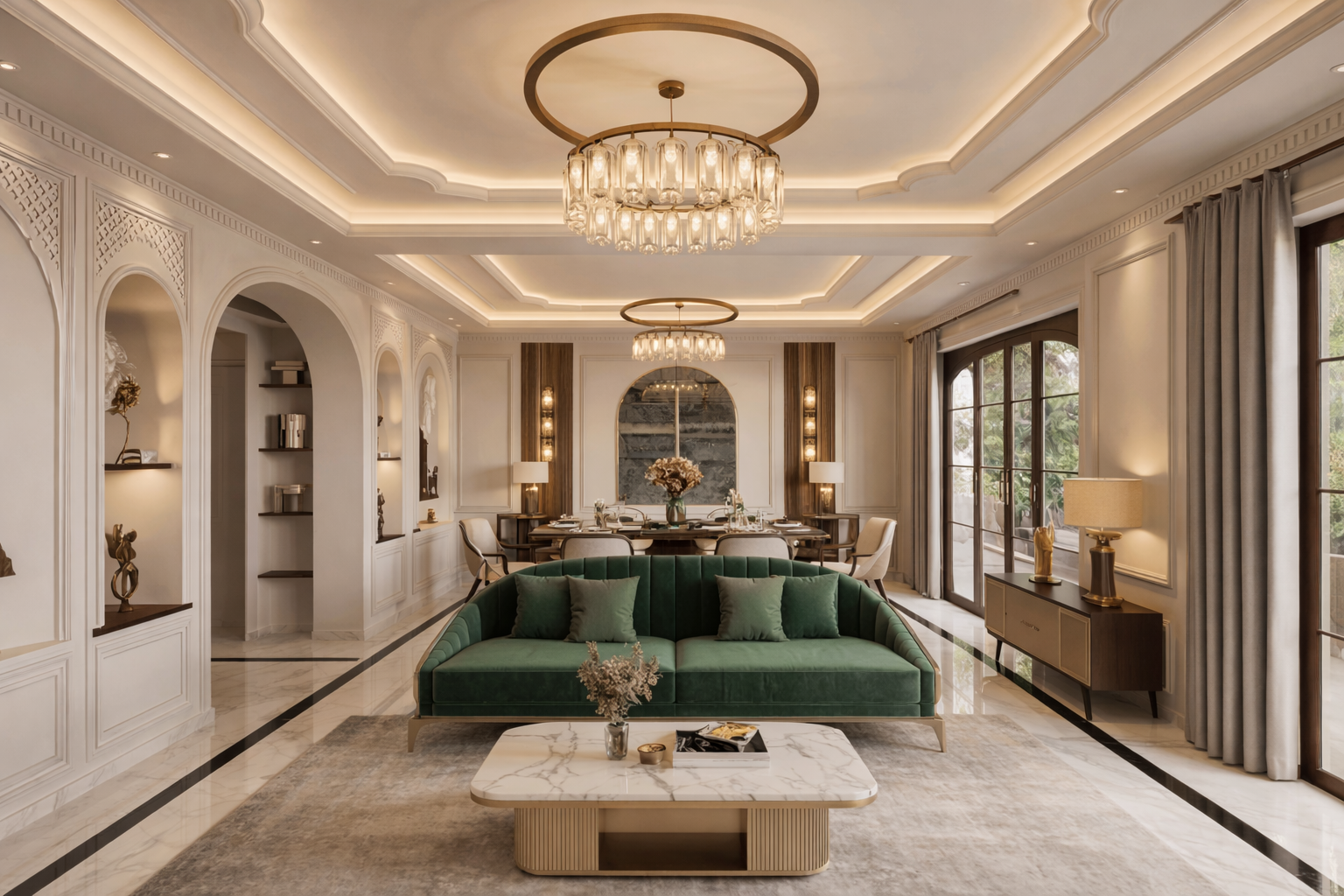
Cove Lighting–Focused False Ceilings for Living Rooms
In modern homes, cove lighting has evolved from a supporting feature into the central design element of false ceilings. Living rooms in 2026 are increasingly designed around indirect lighting that spreads evenly across the ceiling, reducing glare and creating a warm, inviting ambience. Instead of multiple downlights, designers now prefer subtle LED strips concealed within ceiling profiles. This approach not only enhances comfort but also gives the space a premium, hotel-like feel that works well for both everyday living and entertaining guests.
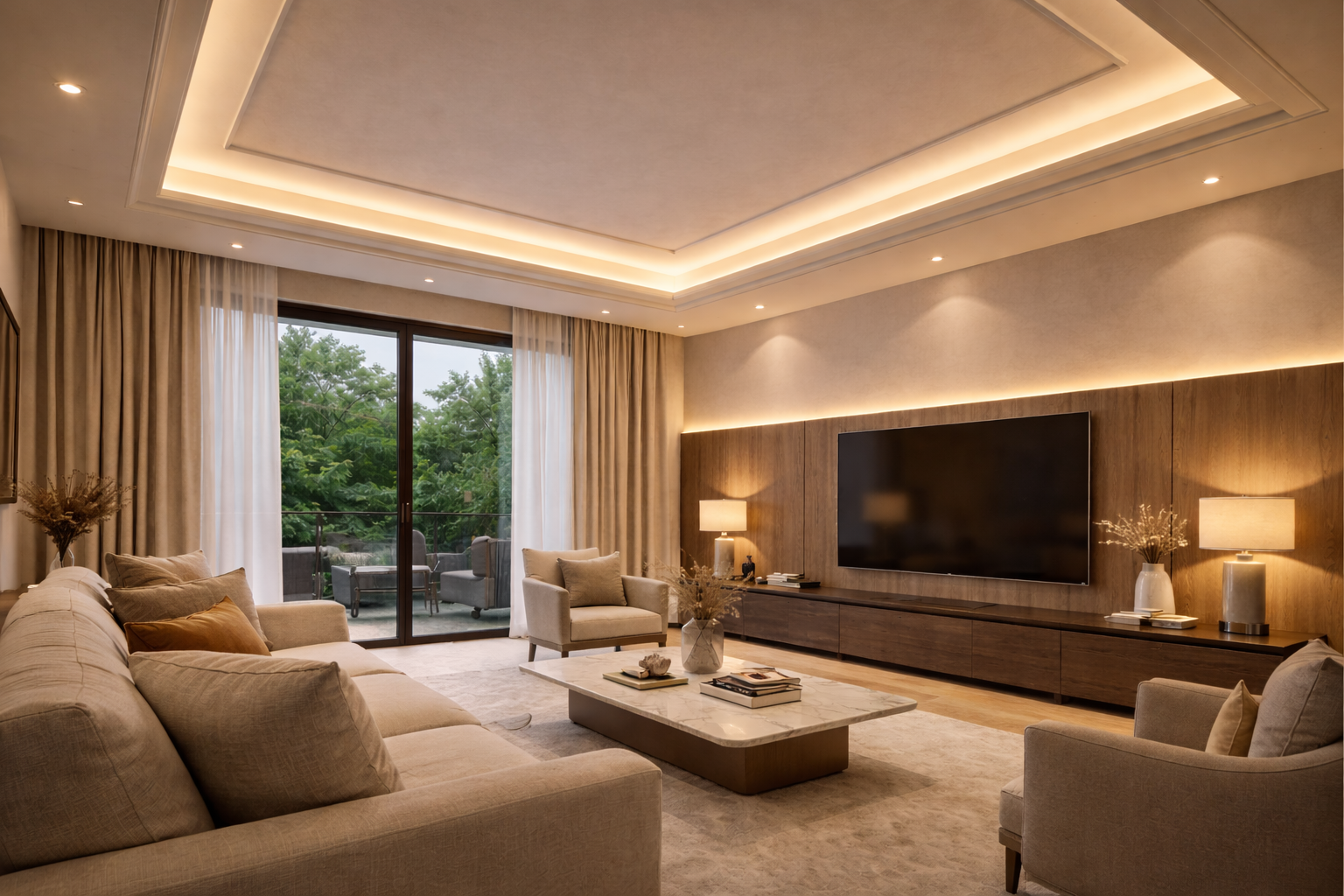
Natural and Biophilic Ceiling Designs for a Warm Interior Feel
As homes become more urban and compact, there is a growing desire to reconnect interiors with natural elements. Biophilic false ceiling designs reflect this shift by incorporating wooden textures, curved gypsum forms, and earthy finishes. These ceilings add warmth and softness to modern interiors, breaking the monotony of flat surfaces. In 2026, this trend is used thoughtfully—often in select areas such as living rooms or reading spaces—so that the design feels organic rather than overpowering. The result is a ceiling that subtly enhances comfort and emotional well-being.
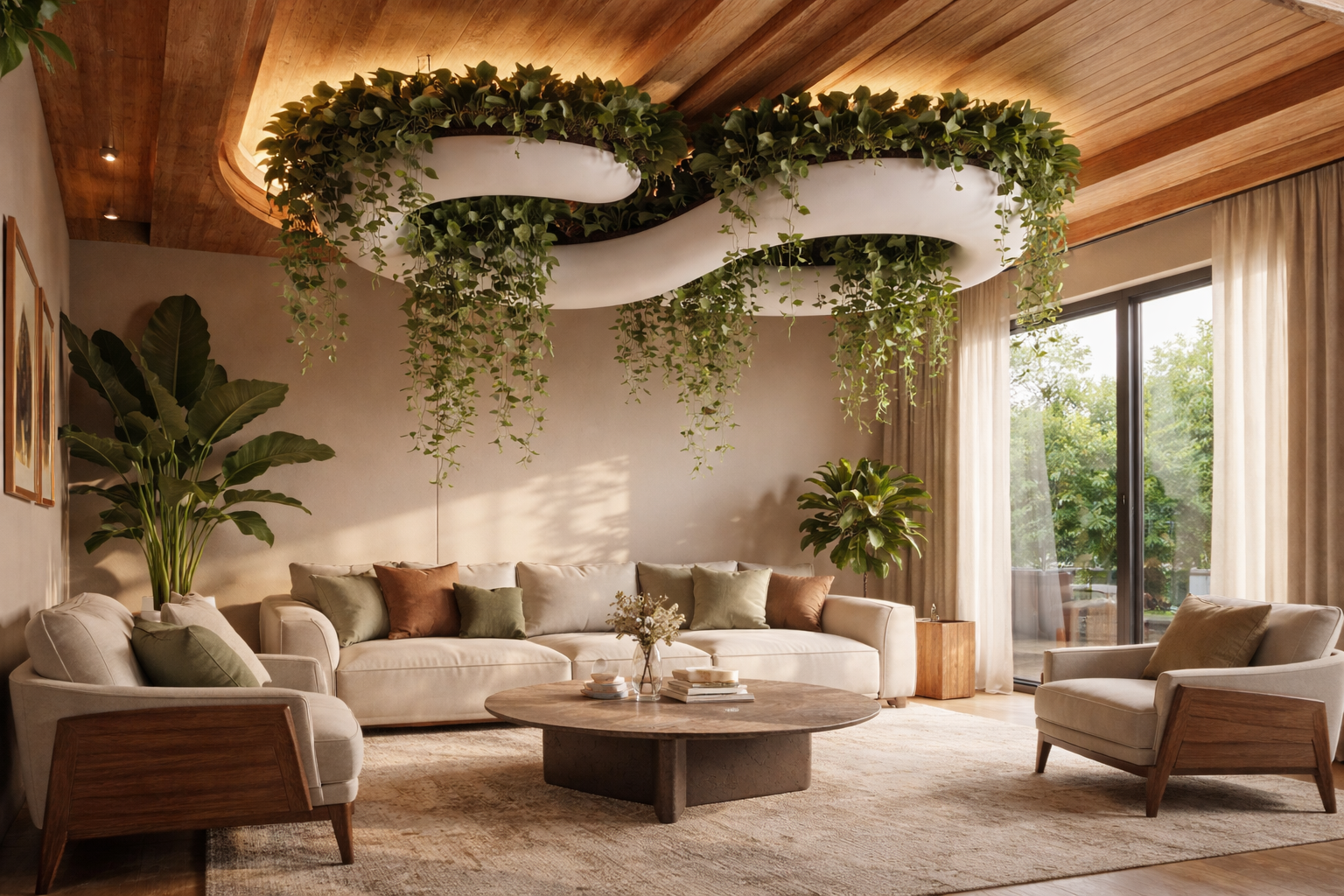
Statement False Ceilings for Feature Spaces
While minimalism dominates most rooms, statement false ceilings still have their place when used with intention. Instead of applying bold designs throughout the home, designers now focus on highlighting one key area, such as the living room or dining space. Geometric patterns, layered circular forms, or textured panels paired with focused lighting help create a striking visual moment. In 2026, the emphasis is on restraint—allowing one statement ceiling to stand out while keeping the rest of the home visually calm.
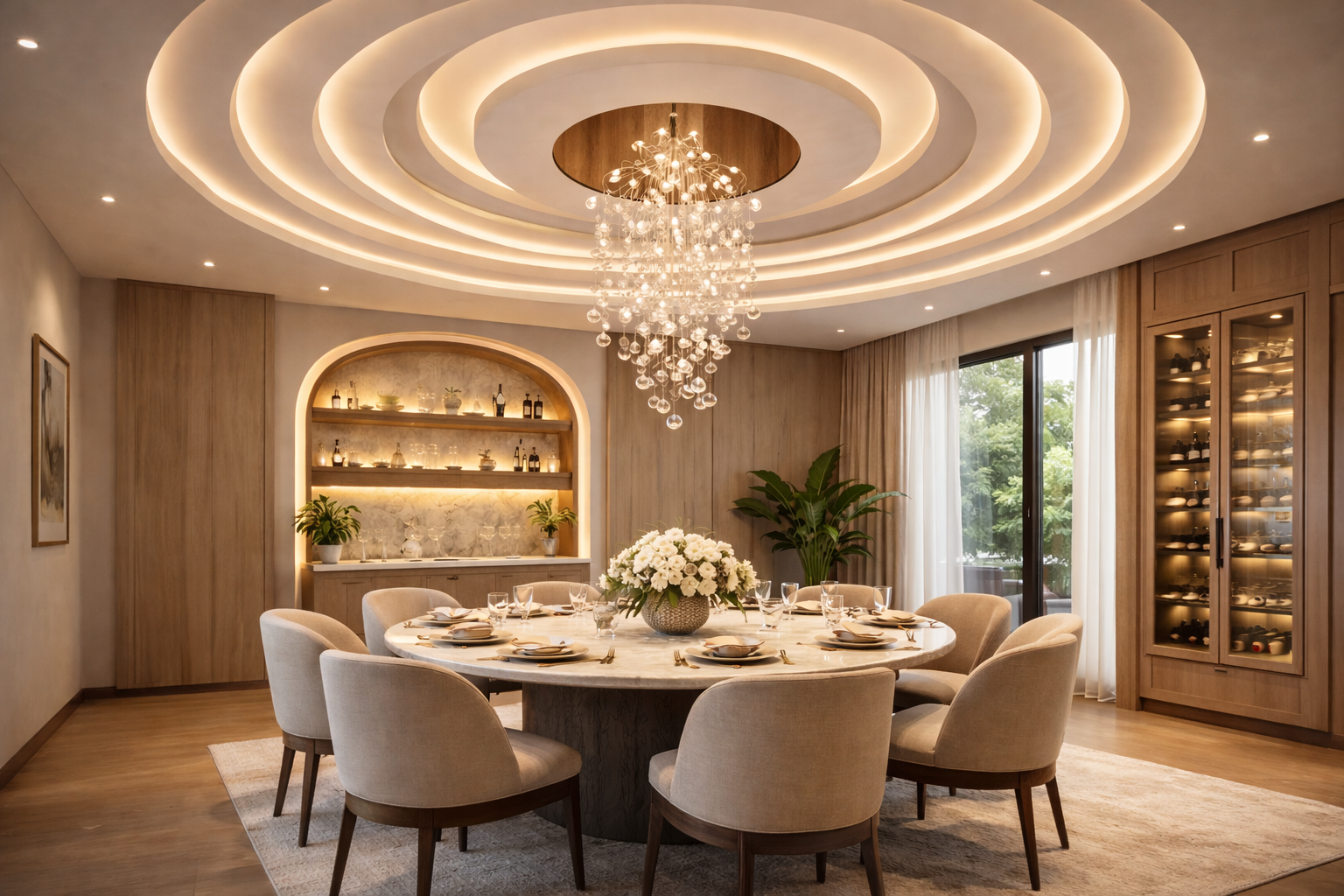
Smart Lighting Integration Within False Ceilings
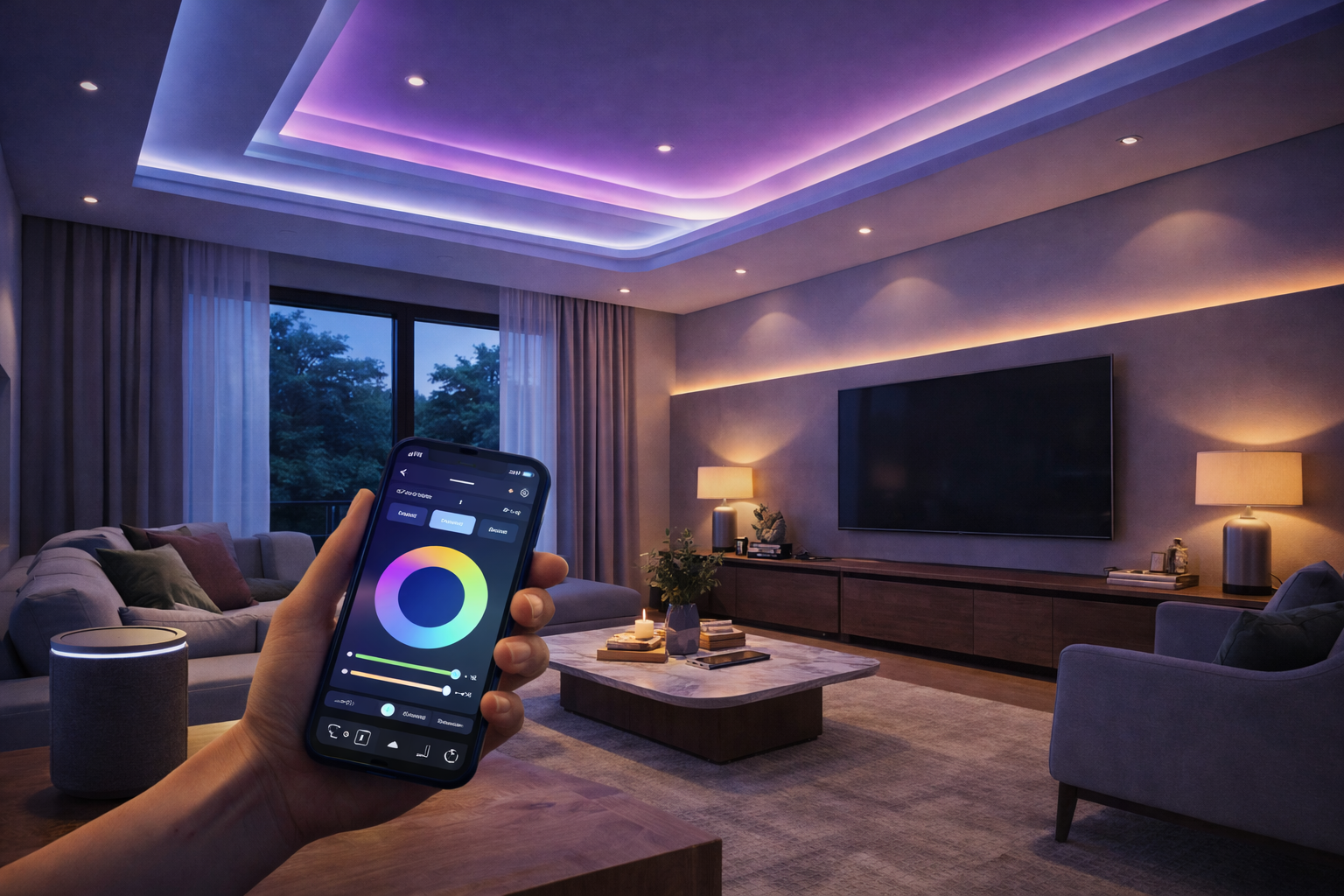
Technology has become an integral part of ceiling design. False ceilings in 2026 are increasingly planned to support smart lighting systems that adapt to different moods and activities. Dimmable lights, scene-based settings, and app-controlled or voice-controlled systems are now common in modern homes. By integrating these features seamlessly into the ceiling design, homeowners can enjoy flexibility and comfort without visible clutter. This smart approach ensures the ceiling remains clean while offering greater control over the living environment.
Acoustic-Friendly False Ceilings for Home Offices and Media Rooms
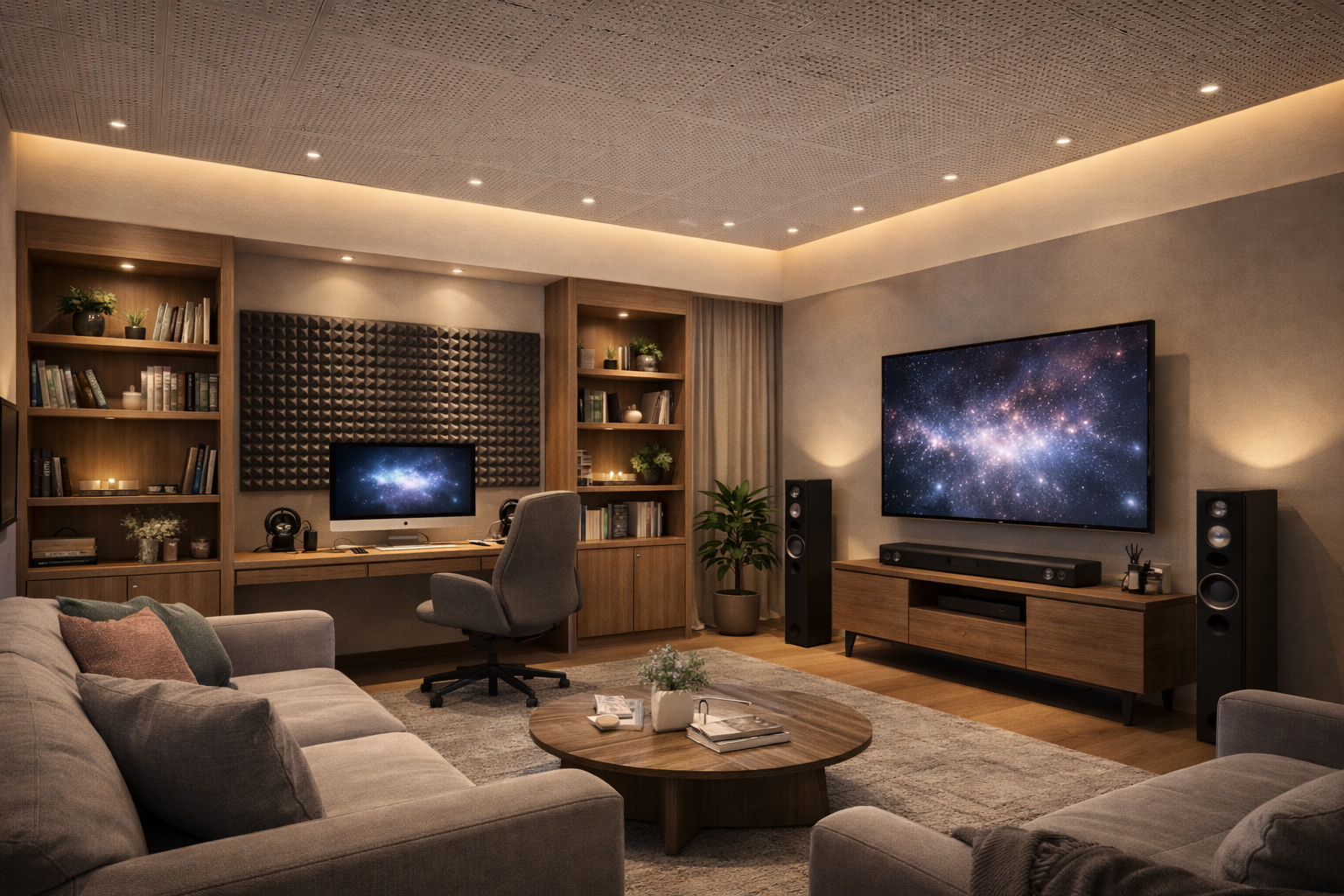
With remote work and home entertainment becoming part of daily life, acoustic comfort has gained importance. False ceilings are now designed to reduce echo and improve sound quality, especially in home offices and TV rooms. Acoustic gypsum boards and concealed insulation layers help absorb sound, making spaces quieter and more functional. In 2026, this trend is particularly relevant for apartments, where noise control significantly improves everyday living.
False Ceiling Designs for Low Ceiling Heights
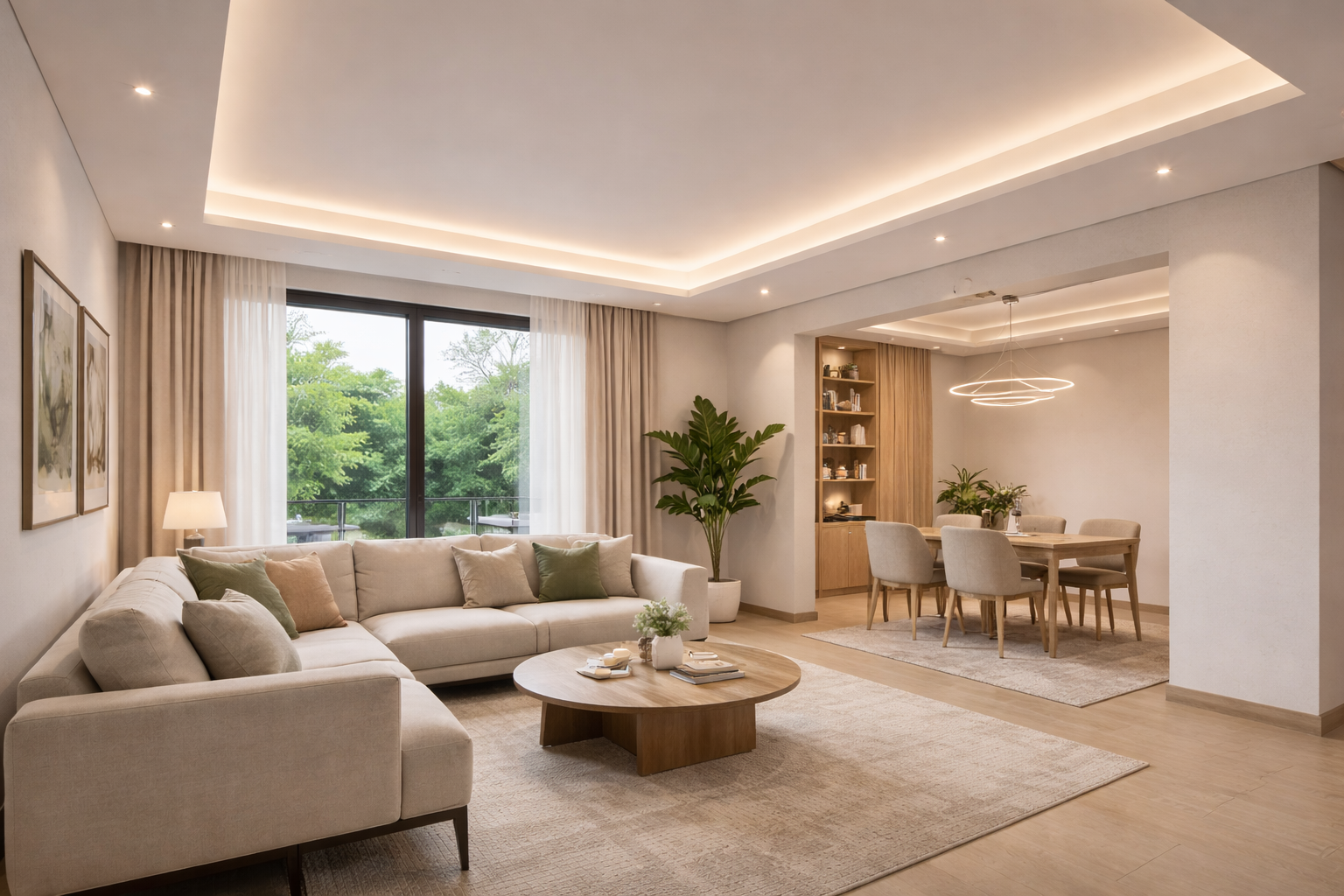
Most Indian apartments have limited ceiling heights, making thoughtful design essential. Instead of deep drops and heavy layers, modern false ceilings now use shallow profiles and recessed edges to preserve openness. Light colours and minimal lighting fixtures further enhance the sense of height. In 2026, designers are proving that simpler ceiling designs often feel more spacious and luxurious than complex ones, especially in compact homes.
Common Mistakes to Avoid in False Ceiling Design
One of the most common mistakes homeowners make is prioritising trends over practicality. Over-designed ceilings, excessive lighting fixtures, and mismatched colour temperatures can quickly make a space feel cluttered and dated. Since ceilings are difficult and costly to modify later, careful planning is essential. A good false ceiling should enhance daily comfort, support lighting needs, and remain visually relevant for years.
.jpg)
.jpg)
.jpg)
.jpg)
.png)
.jpg)
.png)
.jpg)
.jpg)
 Chat With Diva